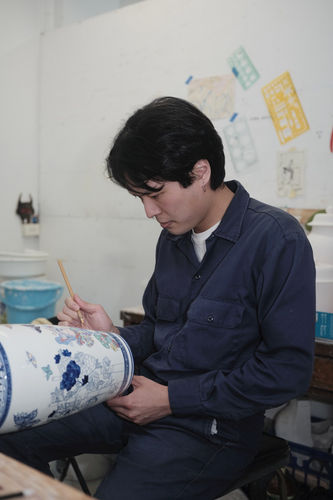
Casey Chen’s Another Jingdezhen Car Boot Sale brings together traditional Chinese ceramics and the exuberance of global pop culture in a playful yet incisive exploration of storytelling, myth and nostalgia. Drawing on the history and reputation of Jingdezhen – the centuries-old porcelain capital of China – Chen blends Qing dynasty aesthetics with a cast of beloved characters including Sun Wukong, Goku, Bugs Bunny and Doraemon. The result is a body of work that feels at once deeply rooted in tradition and effortlessly contemporary, creating a visual language where cultural symbols collide, mutate and re-emerge in unexpected forms.
The exhibition’s title signals its irreverent, intentionally chaotic installation. Ceramics are presented in open suitcases, surrounded by an assortment of objects that invite viewers to question what constitutes an artifact and what belongs to the realm of the everyday knick-knack. This loose, spontaneous display echoes the informal setting of a roadside boot sale, positioning the works within a space that is equal parts market stall, museum vitrine and personal treasure chest. Through this framing, Chen challenges conventional hierarchies of value and authenticity, suggesting that cultural significance can exist just as readily in mass-produced toys as in hand-shaped porcelain.
Chen’s ceramics celebrate the transformation of cultural symbols through humour, affection and a keen understanding of how stories travel across time and geography. His meticulous craftsmanship, rooted in traditional ceramic techniques, provides a counterpoint to the exuberant hybridity of his imagery. This interplay between skill and spontaneity bridges past and present, honouring the weight of history while embracing the fluidity of popular culture.
Ultimately, Another Jingdezhen Car Boot Sale positions Chen’s works as vessels of connection – objects that carry stories, references and memories across generations and worlds. With beauty, wit and a gentle irreverence, the exhibition invites viewers to engage with culture not as something fixed or authoritative, but as a living, evolving conversation shaped by imagination, humour and the joy of shared myth-making.
