-

-
-
-
-
-
-
-
THE TRAPS.
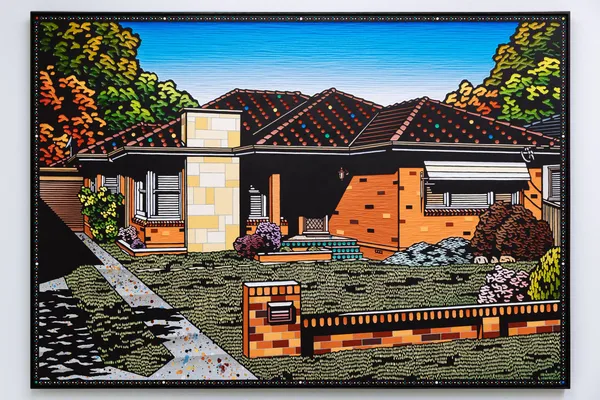
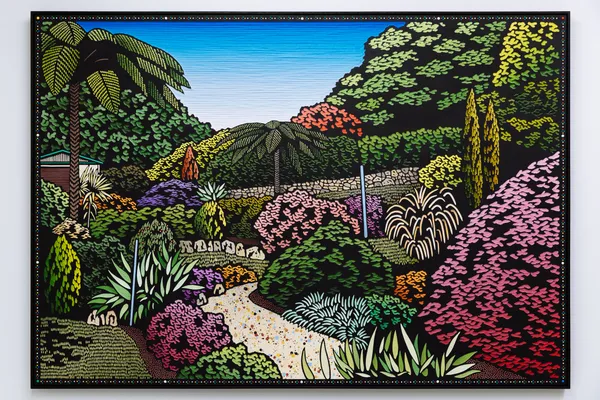
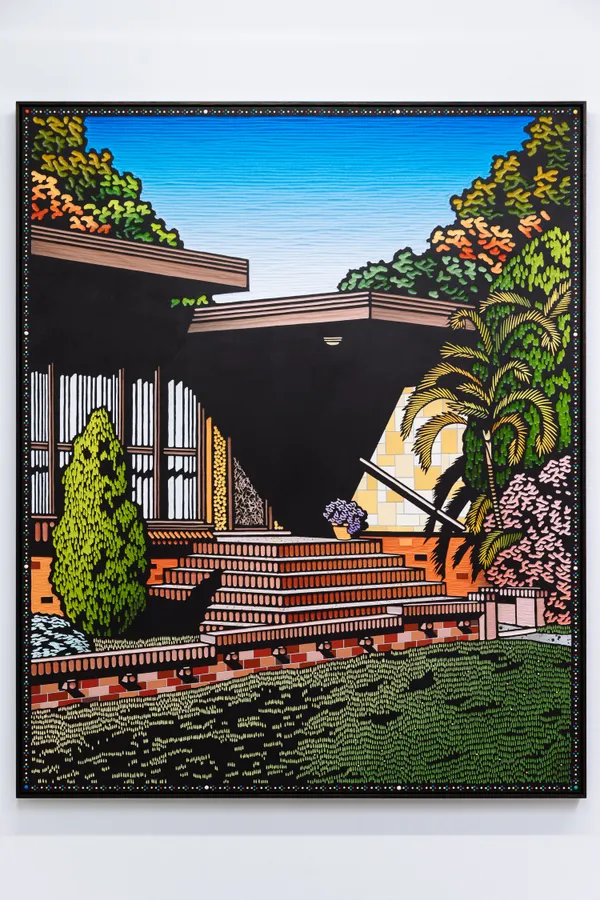
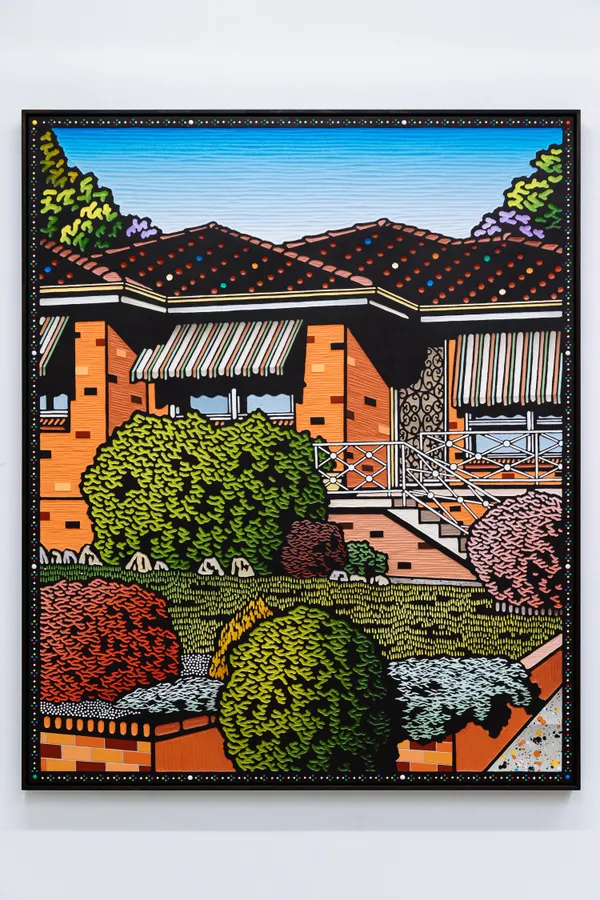
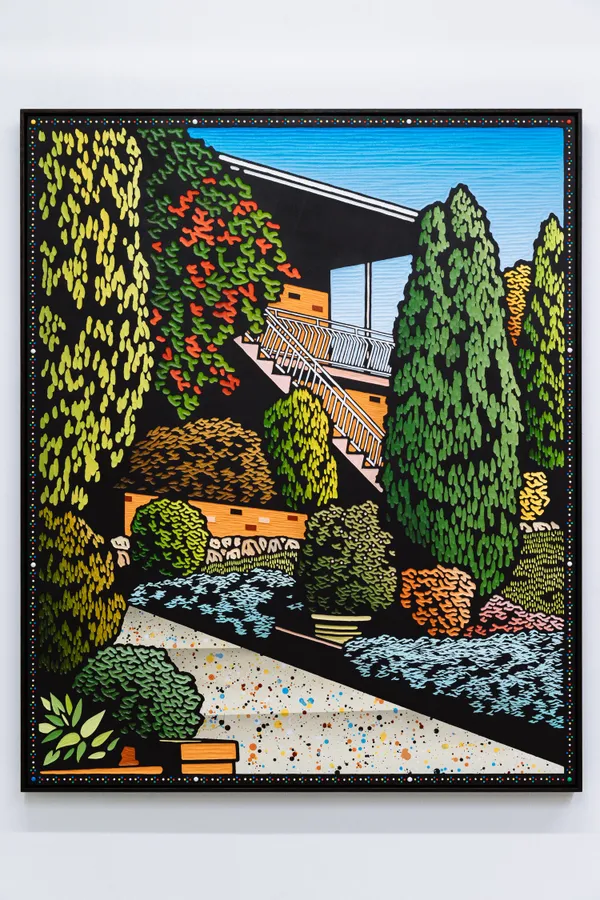
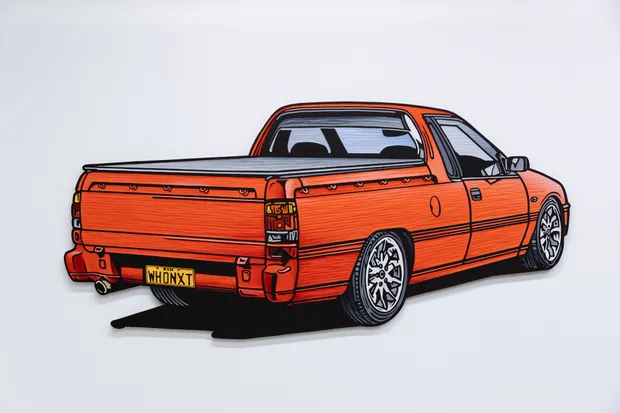
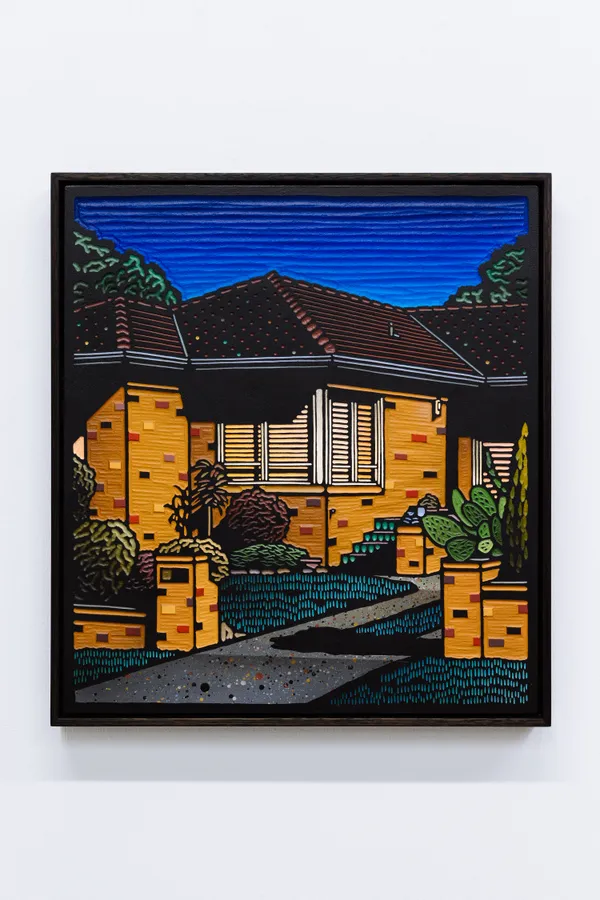
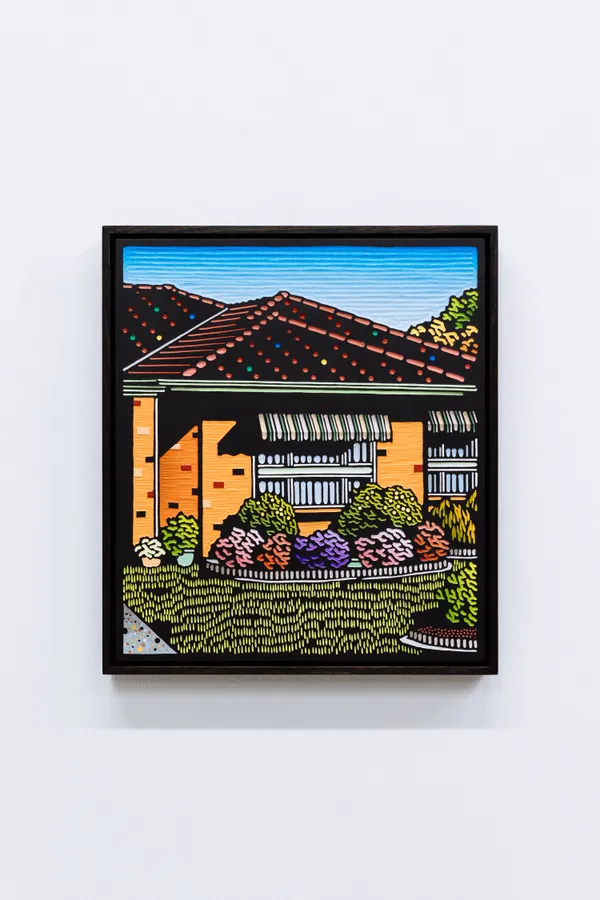
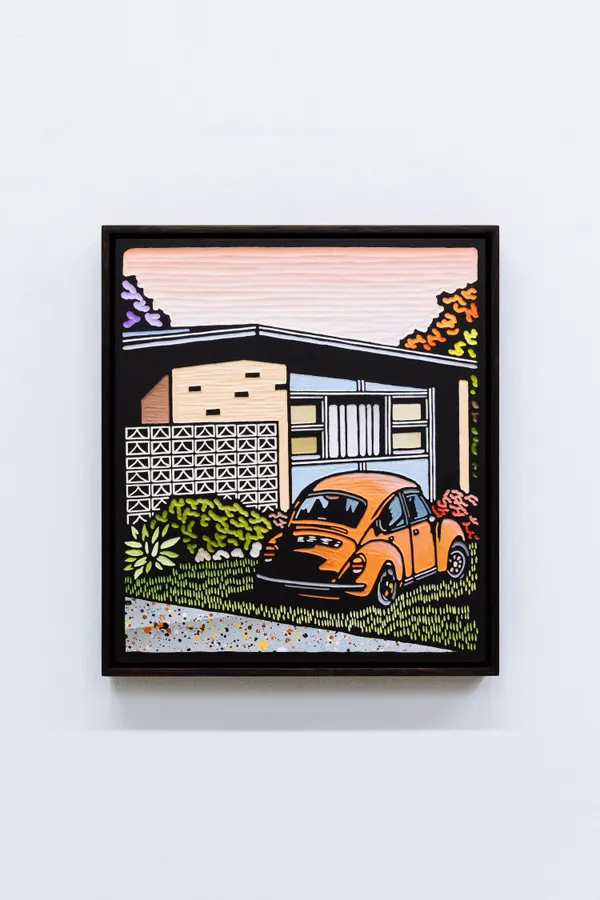
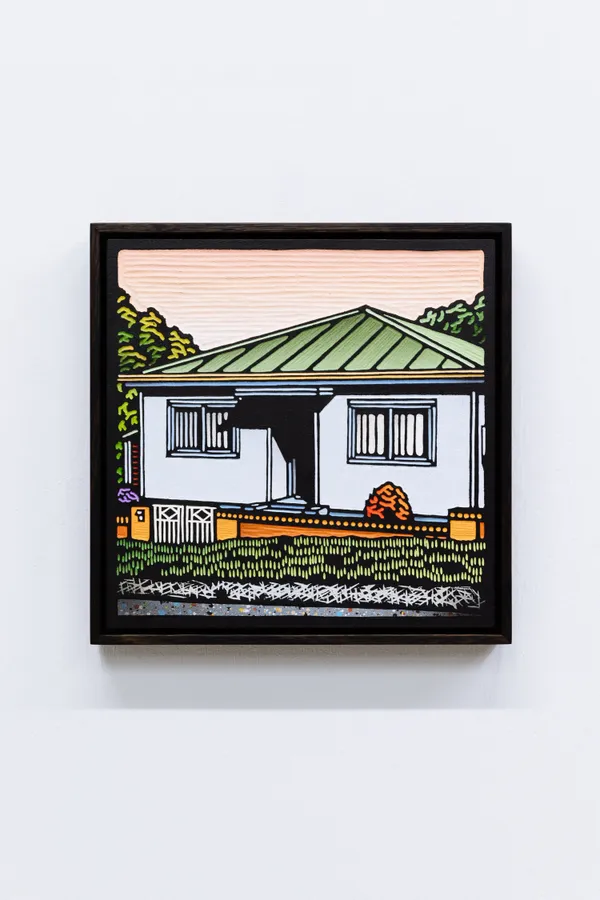
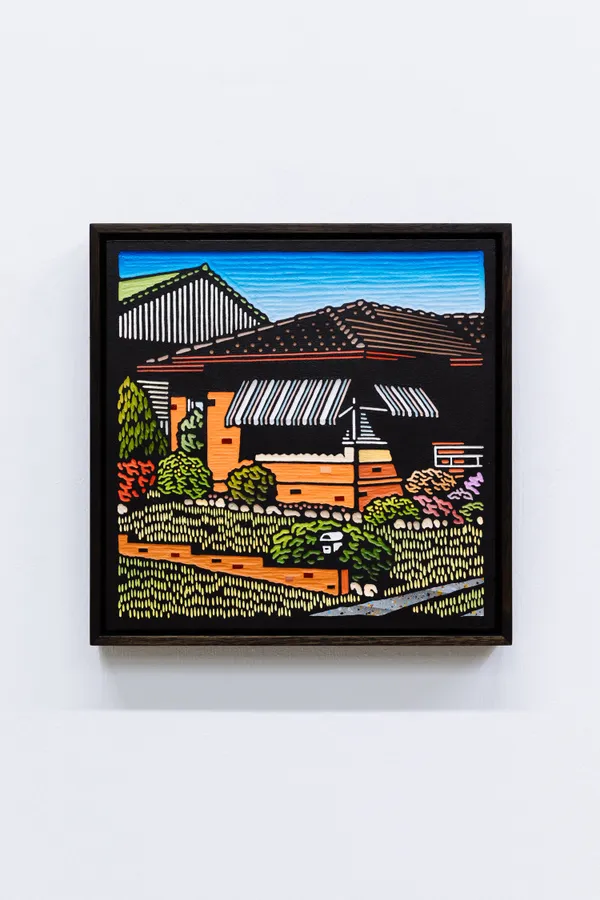
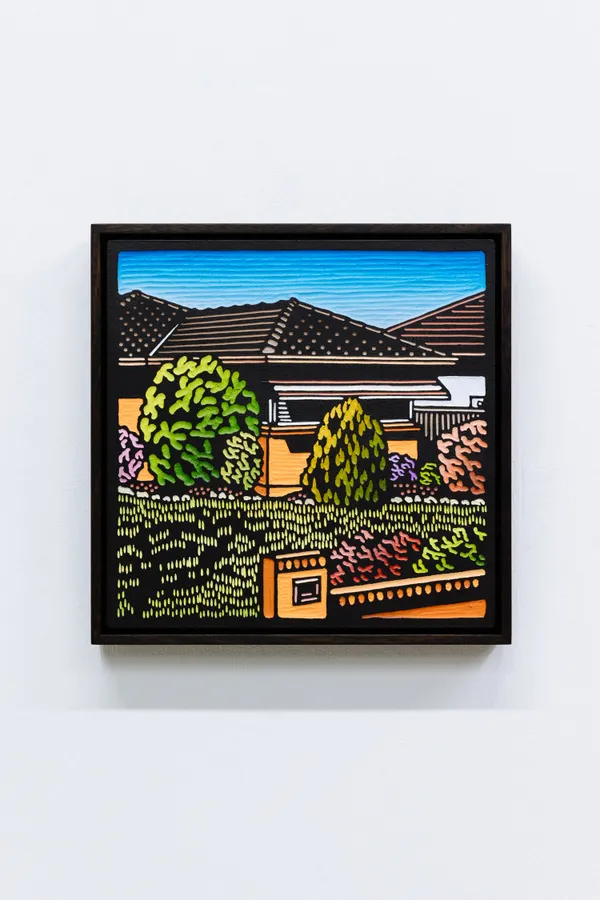
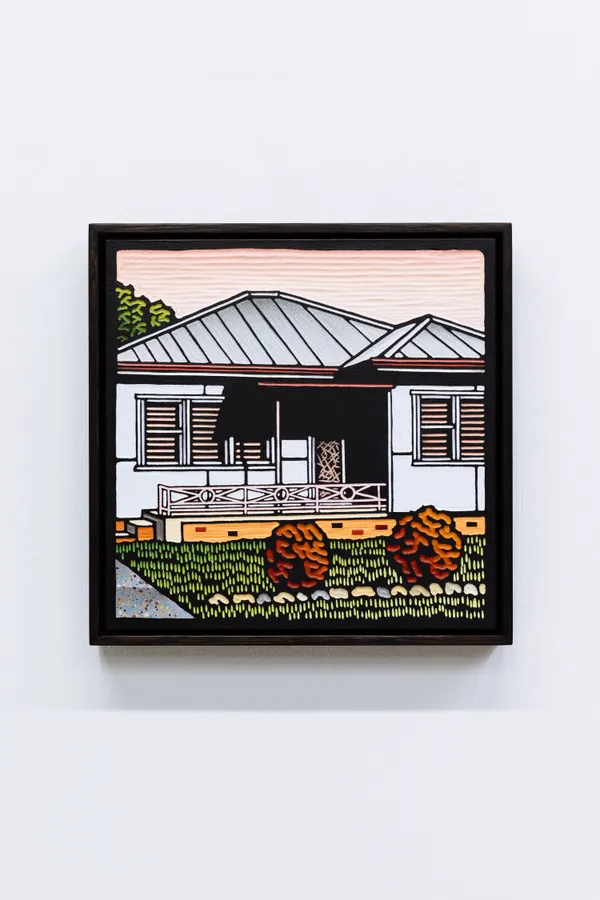
Sophie GerhardThere’s a particular kind of peace in Christopher Zanko’s paintings. It sits somewhere in their ordinariness – their devotion to the everyday. Concrete driveways, striped shutters and overgrown shrubs, the classic red Holden with its personalised numberplate. These places are not spectacular. They are the houses we drive past without looking. The weary streets many of us grew up on. Yet, in Zanko’s paintings, they become luminous. Familiar and immediately recognisable, yet untethered from a specific place. In their fidelity, they slip into Australia’s collective memory, becoming symbols to observe, mould and project our own ideas and images upon.
THE TRAPS marks Zanko’s first major solo exhibition in Sydney, bringing together a new body of work that consolidates and extends his longstanding engagement with the suburban vernacular. Like his paintings, the traps, as a colloquialism, is widely recognised, belonging to no single suburb or generation. Around the traps. You know the place.
Like many Australians, my childhood home resembled those depicted by Zanko. An unextraordinary split-level brick house located in (what was in the 90s) a small town in the Illawarra on the South Coast of New South Wales. My parents bought the house for $120,000 back in 1985, back when the ‘Australian Dream’ of home ownership in a quiet neighbourhood was within reach for working class families. This once achievable aspiration held a narrative of settlement and security – young couples moving out of the city for a quieter life, migrant families making new beginnings, second and third generations rehearsing ideas of belonging. These are the neighbourhoods Zanko depicts, and what he captures, in their purest essence, is the architecture of optimism.
The area I grew up in has since grown exponentially. Paddocks and parklands have been developed out of recognition and the places that shaped my early years have been replaced and repurposed. It is precisely this tension between memory and change, between the endurance of the built environment and its temporariness, that Zanko grasps so well. The mid-twentieth century red-brick and prefab houses that define Zanko’s subject matter are disappearing at pace, particularly around the area Zanko works and where I grew up. Built quickly and cheaply to house the migrants who arrived after the Second World War to work in the local coal mines and steelworks – they were never built to last. The materiality of Zanko’s images is a balm for this loss. The act of carving into wood is, as he has described it, like writing your name in cement. A self-confessed ratbag in his younger years, Zanko was a teenager during the area’s economic downturn of the early 2000s, when much of the region's industrial backbone – the steelworks, the coal infrastructure, the printery, buildings that had defined the Illawarra for generations – went quiet or closed entirely. He and his friends would tag the buildings that were slipping into obsolescence. Even back then, the urge was the same: to inscribe presence into a changing landscape.
Zanko’s process is meticulous and time-consuming. He began his training at West Wollongong TAFE, where he became interested in printing with linoleum – a material as embedded in suburban domestic life as the houses he would come to depict. After graduating, without studio access, he moved away from the printing press but kept the discipline of carving—the slow removal of material that became his signature approach. Zanko’s images are incised with architectural precision, their forms built through removal before they are returned in layers of saturated colour.
For THE TRAPS, his process has become even more pronounced. The works are tighter, the shadows and black outlines bolder and more assertive. These houses hold their ground. The works begin with real references from Zanko's locality before he subtly dismantles their specificity, quietly shuffling and recombining elements until the source becomes unverifiable. He calls this a ‘fictionalising’ of the image: a real home, intimately known by its inhabitants, becomes just ambiguous enough that it could be anywhere, or belong to anyone. This reflects something true about the suburbs themselves. Australian suburbia has been shaped over decades by the lives and cultures of those who have come, made their mark and left again. Iron lacework and terrazzo tiling installed by European Australians decorate fibro houses from the 1950s while ceramic pots and neat rows of clipped bamboo line the pathways of streets populated by Asian Australian communities. In loosening his grip on the specific, Zanko makes room for all of it.
And while the nostalgic suburban image presents something picture-perfect and ideal, Zanko is the first to admit that a darker presence moves through any honest conversation about suburbia. The Australian Dream of home ownership and peaceful family living is built on unspoken costs – colonisation and displacement sit beneath these quiet streets. It's a mythology that crumbles under scrutiny. But there's another kind of darkness too, one that doesn't require historical analysis to feel. In his portrayal of the quiet and mundane, Zanko leaves space for this – for the stories that don’t make it past the front door. There is an eeriness in the total stillness of his images, in the complete absence of human life. These streets could be Pleasantville; a world so composed it curdles. The large blocks of shadow that interrupt the gaze and block the whole picture are the works’ most unsettling element. While the houses and gardens hold perfectly still, these shadows seem capable of movement – the sun casting its arc across the same rooflines and driveways, day after day, in a rhythm that is at once deeply comforting and faintly menacing.
In every painting, Zanko holds us at the boundary – the footpath, the driveway, the front fence – and for all their warmth of colour and the intimacy of their rendering, the doors remain closed. We are kept at the distance of a neighbour. It's this withholding that keeps the work from tipping into sentimentality. Zanko paints suburbia as it actually operates – outward-facing, composed, legible only to a point. What happens after the front door closes is none of your business. In refusing to populate these scenes, to offer a figure on the porch or a child’s bike left out on the lawn, Zanko resists the easy emotional cue and leaves only structure, both architectural and psychological, for the viewer to furnish themselves.
However, Zanko doesn't let you steep in this unease for long. His exhibition design for THE TRAPS carries the same lightness as his paintings. The gallery is cut through with lengths of Colourbond fencing – the iconic corrugated metal that defines so many Australian properties – which dissolves the white cube's pretensions. Among the paintings sits Suburban Opera, a work housed in a metal sandwich board frame, the kind you'd find outside a suburban deli, now standing on the gallery floor. The painting itself – a modest house with an improbable Grecian fountain in its front garden – glimmers with a cheekiness that sits perfectly between sincerity and satire. These curatorial gestures are deliberate and unpretentious. If Richard Serra used industrial materials to reconfigure your relationship to space, Zanko uses the familiar detritus of Australian everyday life to do something similar, with just a little less reverence.
In a country where the built environment is in a state of constant flux, that act of making – slow, deliberate, carved into wood – feels less like preservation and more like a kind of insistence. THE TRAPS is not a love letter to the suburbs, but a record. Honest, unhurried, and a declaration that the ordinary deserves our attention.
-