-

-
-
-
-
-
-
-
Dear Sally,
I read your email on my phone as I hold my ten-week-old son, his small warm body curled into mine. His head rests just below my chin so that with only a slight movement I can brush my lips across the downy hair on his head and plant gentle kisses. It is hard to believe that mere months ago he was curled up inside my body, held in the warm cocoon of my womb.
Your invitation to write a text for your exhibition Holding Patterns, River Hug is prescient because I have been thinking a lot about the ways that motherhood has shifted (is still shifting) my relationship to myself, my work, the world. I desire, with a feverish curiosity, to know how other mothers navigate these spaces.
Leslie Jamison writes in Splinters, her memoir about navigating early motherhood, of her attempt at “crafting a self that understood work and motherhood as forces that could feed rather than starve each other.” (p. 56)
In your paintings, I recognise an intimate and poetic exploration of what is means to be a woman, a mother, and an artist.
--
I am writing this text on my phone while holding my son. He prefers to be held… but don’t we all. The image of mother and child (mother holding child) has been represented time and again throughout art and image making.
I recently read the book The Baby on the Fire Escape by Julie Phillips, in which she writes that “Creativity thrives on physical sensations and strong feelings. Mothering, too, begins, if not in pregnancy or childbirth—neither one a requirement or a given—then in the sensuous or comforting touch of parent and child.” (p. 21)
Sally, I think of the photo you shared with me of you embracing your son in the river at Brunswick Heads.
How do we create and recreate patterns of holding and being held?
To hold: (verb) meaning ‘to keep, tend, foster, cherish, watch over’.
Also, ‘to have as one’s own’ (a room of one’s own / a child of one’s own).
--
I am often these days sitting inside on the couch or bed, facing the windows as I hold or feed my baby. I think of all the other mothers who are doing the same in their own homes and I feel connected to a powerful lineage. I watch the world go by outside my home, distorted through the sheer curtains: trees swaying in the breeze, people walking along the street. My windows face west: the arrival of the afternoon sun and the chatter of children heading home from school herald the winding down of another day. Sometimes we don’t leave the house at all. Domestic spaces take on new meaning when you are bound to them.
Louise Bourgeois made her series of paintings titled Femme Maison (translating literally to ‘woman house’) in 1946-47 when she was raising three young sons. I see the mothering artist held within the domestic space; but also, perhaps, the mother as home, holding those who reside within.
--
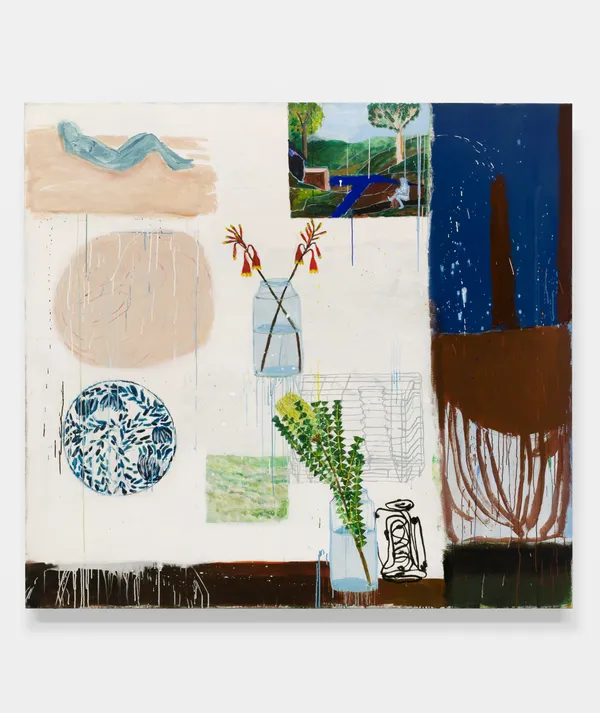
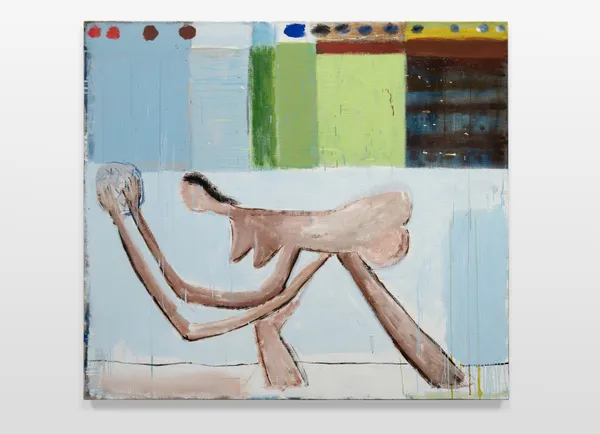
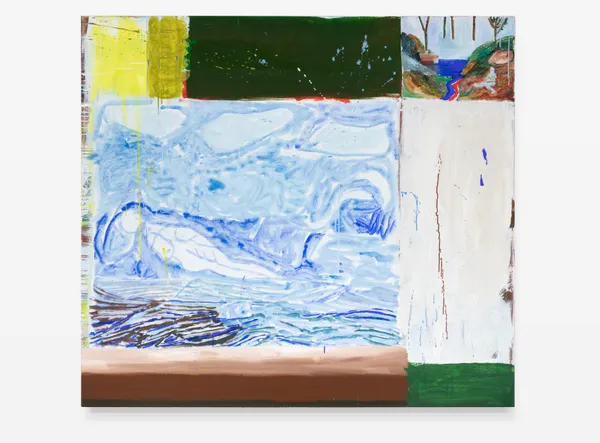
Sally, I see you in these works. Self as the abstract, elongated female form referencing Picasso’s bather, itself an allusion to the ‘first’ woman, Eve – reaching out for the ball or the forbidden fruit. I also see you in the arrangements of cut flowers in vases, the pieces of fruit placed carefully in bowls, the collection of ceramic vessels – these everyday objects that you chose to keep in your domestic space and to reproduce in your paintings.
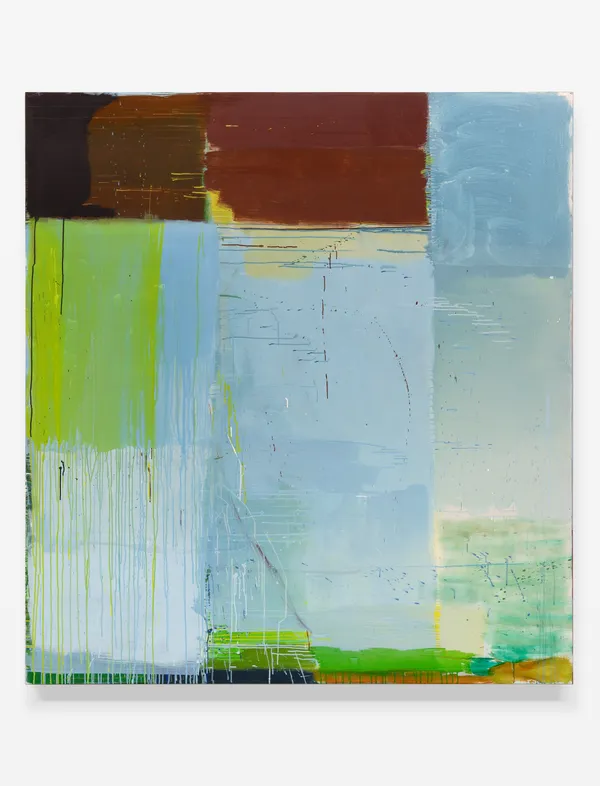
You say you see your paintings as patchwork quilts. On your canvases, images of domestic mundanity and the artistic are collaged together: a dish rack, a child’s bead maze, a handmade ceramic vessel; your son’s drawings alongside paintings by Picasso, Matisse and Olley. Familiar images repeat and cycle through your paintings in different arrangements, building your own visual lexicon.
Patchworking is an ancient form of needlework that involves stitching smaller pieces of fabric together to create a larger pattern; traditionally made by women from the textile scraps of everyday domestic life. A quilt is also something that holds you and keeps you warm, and your paintings do this too.
--
It is 1am and I am rocking my baby, trying to lull him back to sleep. My days and nights have taken on a different shape, blurring into each other, marked not by the rise and fall of the sun but the three-hourly sleep/feed cycle dictated by the small human I am holding. I track time passing not only in weeks but in grams, as my tiny boy grows.
What makes up a life?
There is the mundanity, the cyclical rhythms of the everyday. Within this there are rituals that we create –morning coffee in a handmade mug, a bedtime bath – and there is beauty and tender moments to be found, memories to be made.
The titles of your paintings contain sometimes cryptic references to the people, places and things that influence and appear in your works. Lists of coded annotations, like jottings in the ‘notes’ app on my phone, act as memory triggers revealing a life full of creativity and love.
--
Dear Sally,
I am finishing this text as my baby wriggles and squirms beside me in the bed. He is now fifteen weeks old and has grown and learnt so much in the time it has taken me to write this.
I am learning that to be a mother is to never be truly alone. The act of creation is not solitary, not uninterrupted; often taking place not in a room of one’s own, but amongst the chaotic, messy space of the home. It is a choreography (see Henri Matisse’s dancers) between the role of mother and the role of artist (or writer).
Sally, your paintings articulate so beautifully the experiences of mothering and artmaking, and the ways that each informs, supports, and inspires the other. I am only just embarking on this journey of motherhood. As your journey continues to evolve, I hope that you find spaces to be held in your creative practice, just as your art provides a space for others to be seen and held.
With love,
Laura
-