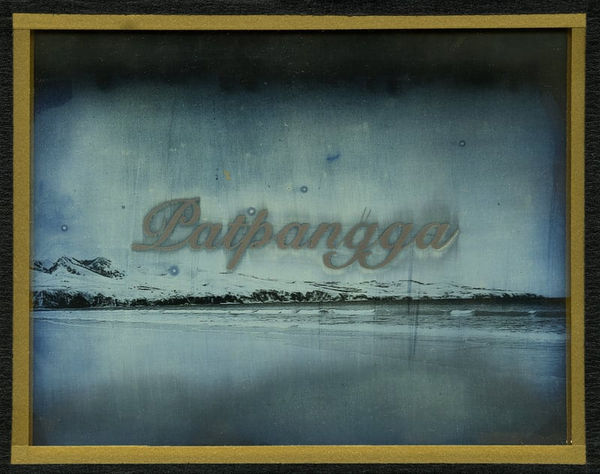
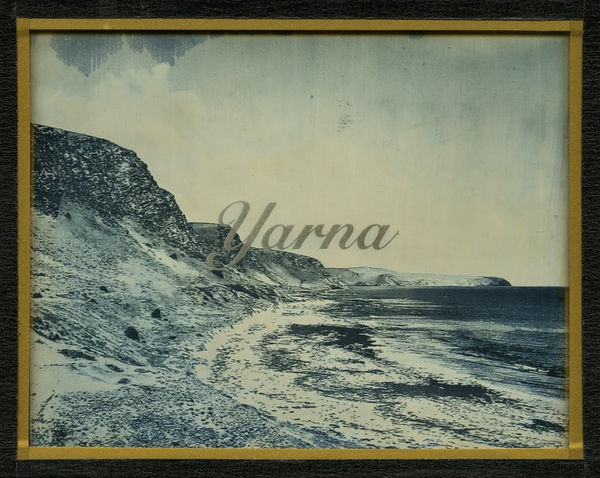
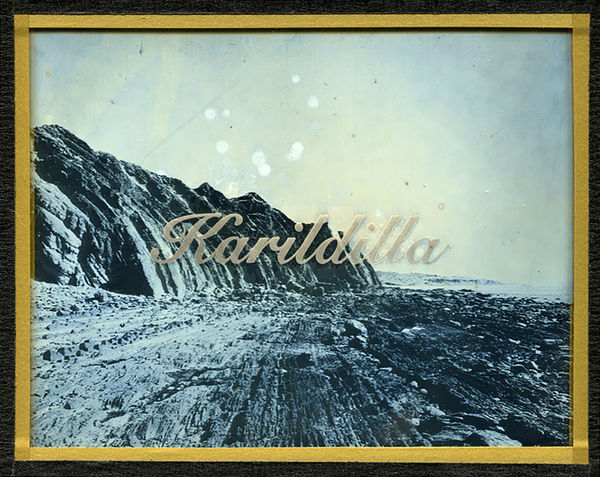
Turrangka…in the shadows surveys over a decade of James Tylor’s practice and brings together the most comprehensive selection of his unique daguerreotypes, expansive digital photographic series, hand-made Kaurna cultural objects and furniture.
The exhibition title is drawn from a Kaurna word, highlighting a significant ongoing aspect of Tylor’s practice: the learning and sharing of his Indigenous language. As well as shadow, turra also translates to reflection, image and mirror.
At the core of Tylor’s practice is a continuously innovative program of photographic intervention, disrupting the image to redact or highlight visual information. He systematically alters the reading of Country by excising information from the photographic print or inscribing language and place-names onto the surface of his daguerreotypes.
These photographs provide a glimpse into Tylor’s broader practice of recreating Kaurna cultural artefacts, architecture and ephemera. Antiquated analogue photographic processes including Becquerel daguerreotypes and hand-tinting are also used to generate a new archive of pseudo-historical images. Tylor’s recreations point to the absence of these images from the hegemonic depiction of colonial Australia’s visual history.
James Tylor is a multi-disciplinary visual artist whose practice explores Australian environment, culture and social history through photography, video, painting, drawing, sculpture, installation, sound, scent and food.
James’ artistic practice specialises in experimental and historical photographic processes. He uses a hybrid of analogue and digital photographic techniques to create contemporary artworks that reference Australian society and history. The processes he employs are the physical manipulation of digital photographic printing, such as the manual hand-colouring of digital prints or the application of physical interventions to the surfaces of digital prints. James also uses the historical 19th century photographic process of the Becquerel daguerreotype with the aid of modern technology to create new and contemporary daguerreotypes. Photography was historically used to document Aboriginal culture and the European colonisation of Australia. James is interested in these unique photographic processes to re-contextualise the representation of Australian society and history.
* denotes required fields
We will process the personal data you have supplied in accordance with our privacy policy (available on request). You can unsubscribe or change your preferences at any time by clicking the link in our emails.
Thoughtful stories, new exhibitions, and exclusive previews delivered straight to your inbox.
* denotes required fields
We will process the personal data you have supplied in accordance with our privacy policy (available on request). You can unsubscribe or change your preferences at any time by clicking the link in our emails.